· 9 min read
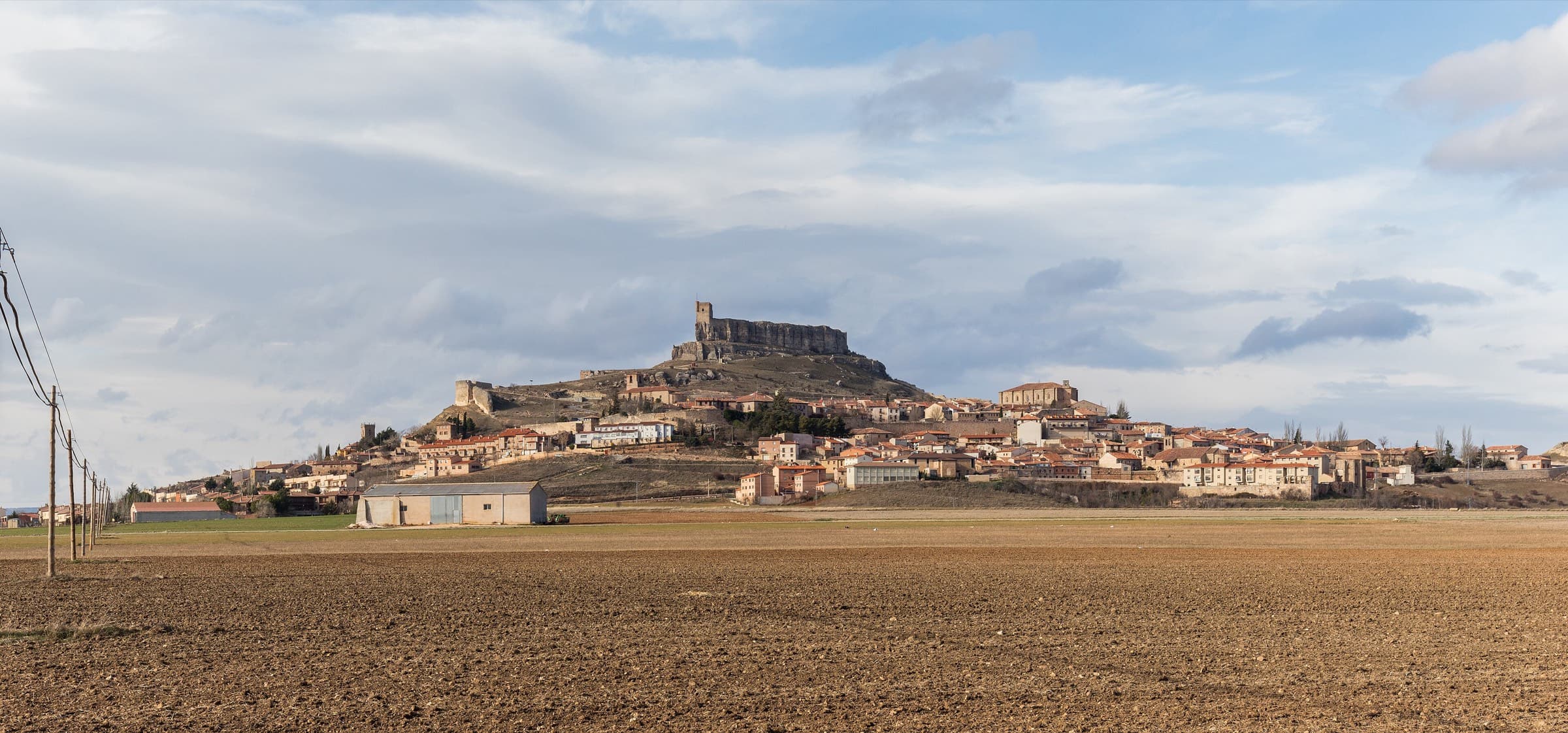
Atienza is one of those villages where you grasp at a glance what Castile once was. On a crag of gneiss rises its castle — a “mighty crag” in the words of the Song of the Cid — and at its feet unfolds a medieval old town of arcaded squares, Romanesque churches and stone manors. In this article we walk through what to see in Atienza at the pace of someone with a full day ahead.
Atienza, a frontier medieval village
Atienza lies in the northern tip of the province of Guadalajara, in the heart of the Sierra Norte, at 1,169 metres of altitude and 150 km from Madrid. Its history is that of a crossroads between plateaus, between Castile and Aragon, and between Christendom and al-Andalus. Hence its castle, its walls and its density of churches in a village that today gathers little more than 400 inhabitants.
Atienza was declared a Historic-Artistic Site in 1961 and forms part of the great cultural routes that cross the Peninsula: the Way of El Cid (end of the “Exile” route and start of the “Frontier Lands” route), the Ruta de la Lana of the Way of St. James and the Don Quixote Route. Together with Sigüenza, it is bidding for UNESCO World Heritage with the “Sweet & Salt Landscape” candidacy, which has already advanced to the preliminary report stage.
The Castle of Atienza: the watchtower of Castile
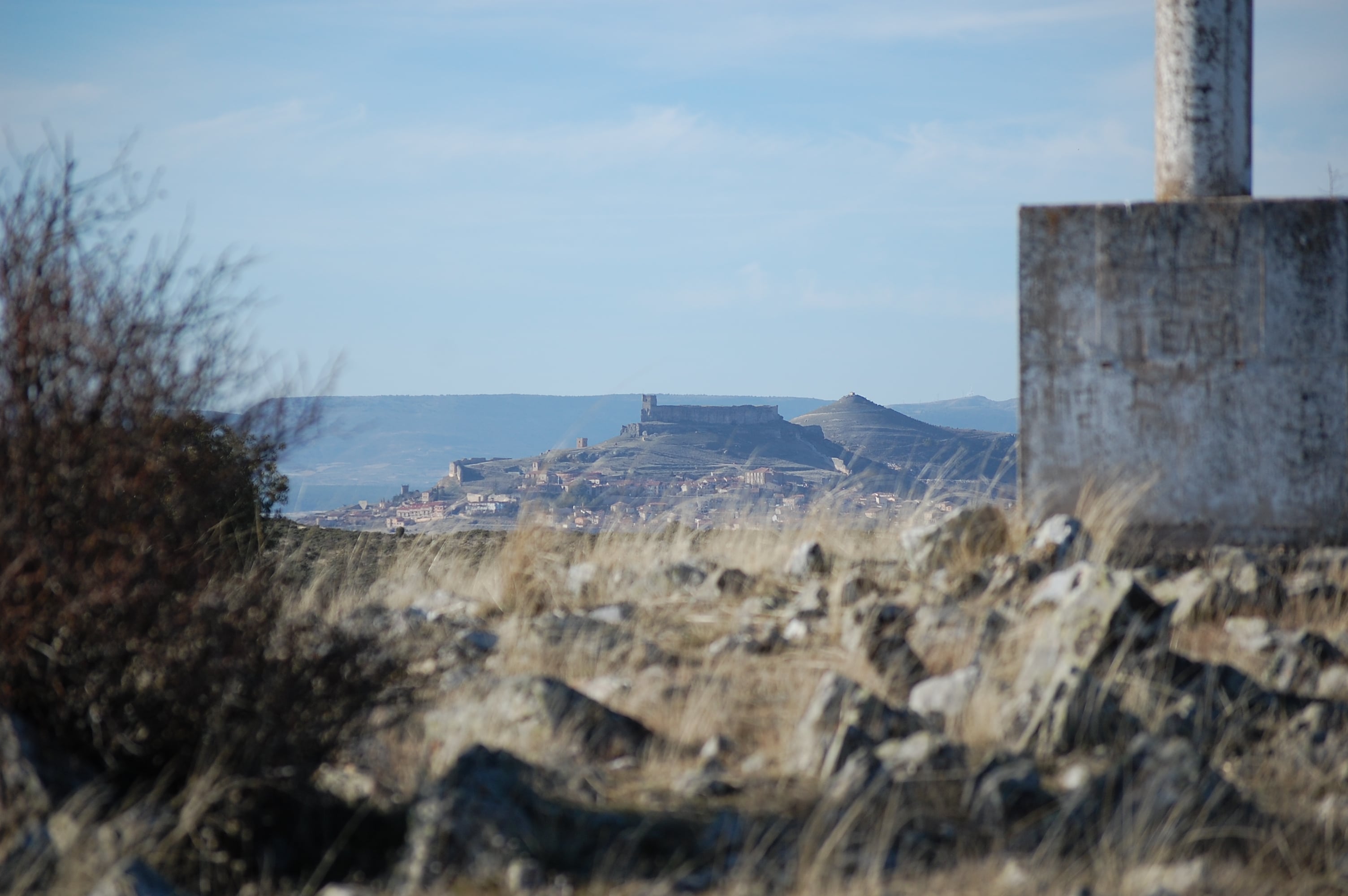
Starting with the castle is starting at the beginning. The crag on which it sits — granite and gneiss — was already a Celtiberian and Arab fortification before passing into Christian hands after the Reconquista. From the Muslim fortress, Christians reused the structure to raise a new castle, last greatly remodelled under the Catholic Monarchs. Today the keep, part of the inner wall and the cisterns carved into the rock survive.
The climb takes about 15 minutes along a stone path. The views from the top justify the effort: westward open the moorlands of the Sweet & Salt Landscape, eastward the silhouette of the Sierra de Pela and southward, the village of Atienza with its churches clearly identifiable.
Plaza del Trigo and the walled old town
The medieval heart of the village is the Plaza del Trigo (or Mercado Square), one of the best-preserved arcaded ensembles in Castile. Its stone-pillar porches, exposed beams and whitewashed houses coexist with the Renaissance façade of the church of San Juan. On its terraces locals and visitors spend the afternoons.
From the Plaza del Trigo you exit through the Arrebatacapas Arch, a Gothic gate that still keeps its popular name: through that narrow passage, the wind would snatch the cloaks (capas) of the muleteers entering the village. The wall, raised in the 12th century and partially rebuilt after the Wars of the Infantes of Aragon, encloses the old town in a double line: the urban precinct and the castle wall.
The seven churches of Atienza
Atienza once had more than a dozen documented parishes. Today seven temples survive, several of them turned into museums. Three are essential works of Atienza Romanesque: San Bartolomé, with its porch of paired columns; Santa María del Rey, at the foot of the castle, with its cemetery integrated into the landscape; and San Gil, home of the museum of sacred art and archaeology.
These are joined by the Renaissance parish church of San Juan, on the Plaza del Trigo; the church of the Holy Trinity, home of the La Caballada museum; and the church of San Salvador, in the suburb of Puerta Caballos. Near the former convent of San Francisco, a Gothic apse of great value is also preserved.
The four open museums: sacred art and palaeontology
For such a small village, Atienza concentrates a surprising density of museums. The Posada del Cordón Museum is the seat of the Centre of Traditional Culture of the Province of Guadalajara, with over 600 ethnographic pieces in a 15th-century inn. The San Gil Museum brings together archaeological pieces and the Romanesque baptismal font of the former church. The San Bartolomé Museum combines sacred art and a striking palaeontology collection with over 3,500 fossils. And the Holy Trinity Museum houses the section dedicated to La Caballada, with the Christ of Forgiveness by Salvador Carmona as its star piece.
Beyond the hill: hermitages, landscape and Sigüenza
The municipal area of Atienza preserves four hermitages worth a walk: the Hermitage of Our Lady of the Star, the heart of La Caballada, about 3 km from the old town; the Humilladero or El Santo, at the entrance to the village; Our Lady of Val, with its remarkable Romanesque portal of ten figures; and Santa Lucía, from the 16th century, beside the CM-1001 road.
Atienza is also a natural starting point to discover the Sweet & Salt Landscape, a joint candidacy with Sigüenza for UNESCO World Heritage. Sigüenza itself is 30 minutes away by car, with its cathedral and parador castle. Combining both villages over a weekend is one of the most complete visits Castilla-La Mancha has to offer.