79 facts about Atienza
Verifiable numbers, dates and curiosities about the medieval village. To carry Atienza in your head before or after visiting it.
The village: geography and demographics
- 01
Atienza sits at 1,169 metres above sea level — one of the highest municipalities in Guadalajara.
- 02
Its registered population is around 406 inhabitants, spread between the old town and several hamlets.
- 03
It is 150 km from Madrid, 30 km from Sigüenza and 80 km from Guadalajara city.
- 04
It is the head of the Sierra Norte of Guadalajara region.
- 05
The municipal area is 84 km², with several hamlets and farmsteads.
- 06
It belongs to the Tagus river basin, via the Cañamares river.
- 07
Climate is continental Mediterranean, with cold winters and mild summers.
- 08
Snowfall happens several times a year, generally between November and March.
- 09
It belongs to Castilla-La Mancha, within the province of Guadalajara.
- 10
The demonym is «atencino» or «atencina».
History and recognitions
- 01
Atienza was declared a Historic-Artistic Site on 31 August 1961.
- 02
Its documented history goes back to pre-Roman times, with the Celtiberian hillfort of Titrhya.
- 03
The 12th-century Song of the Cid mentions Atienza twice, describing it as a «mighty crag».
- 04
In 1149 Alfonso VII granted Atienza a fuero to encourage its repopulation.
- 05
During the Middle Ages it had over a dozen documented parishes.
- 06
It was head of the Community of Atienza, one of the most extensive in Castile.
- 07
The 15th-century Wars of the Infantes of Aragon caused notable depopulation.
- 08
In 1446 the troops of Álvaro de Luna besieged and took the village.
- 09
Atienza has been part of the Way of El Cid since 2007: end of «The Exile» route and start of «Frontier Lands».
- 10
It is a point on the Way of St. James along the Ruta de la Lana, between Sigüenza and Retortillo de Soria.
- 11
It is part of the UNESCO candidacy «Sweet & Salt Landscape of Sigüenza and Atienza».
Heritage: castle and walls
- 01
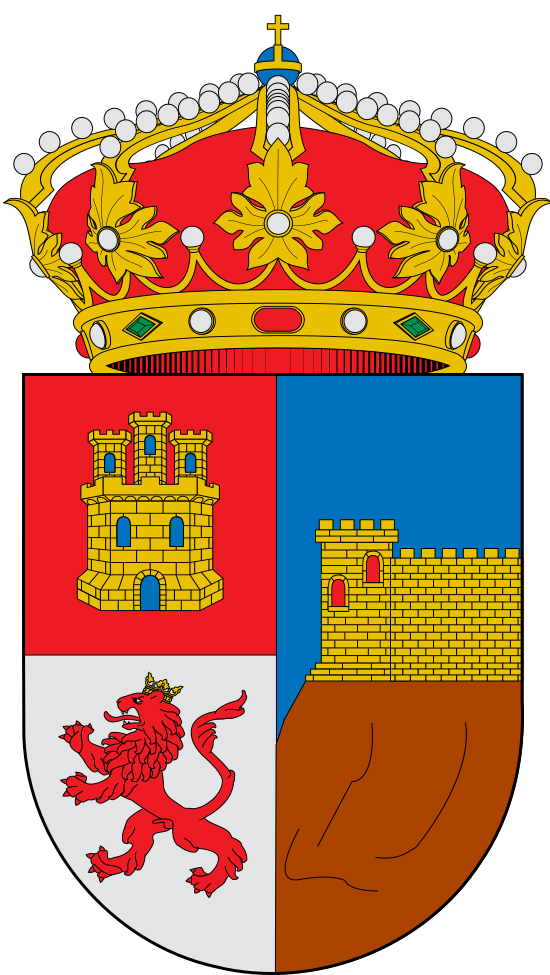
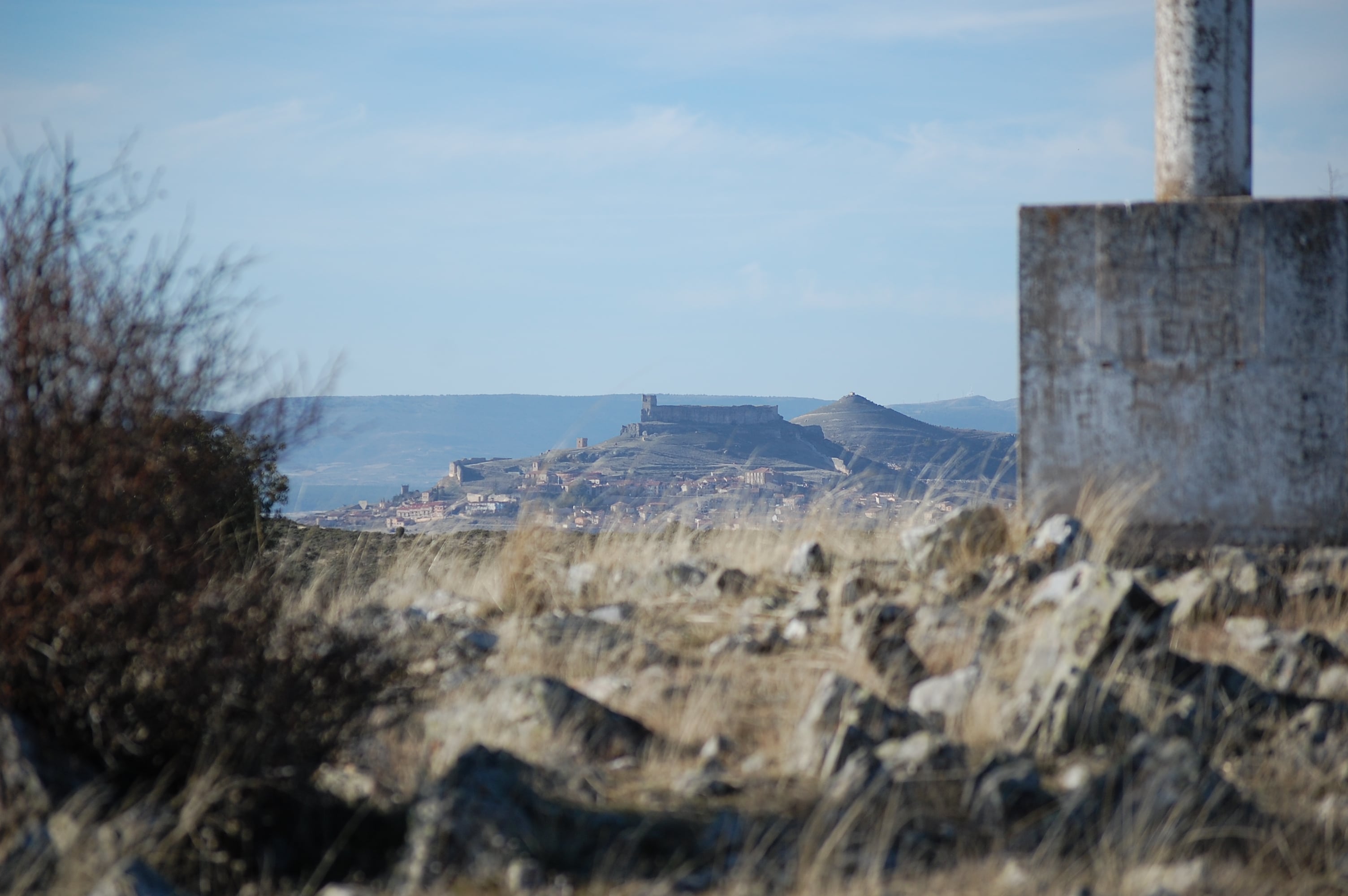
The castle stands on a gneiss crag at over 1,200 m of altitude.
- 02
The fortress has Celtiberian origin, was a Muslim alcazaba and was rebuilt by Christians after the Reconquista.
- 03
It preserves the keep, part of the inner wall and the cisterns carved into the rock.
- 04
The climb to the castle takes about 15 minutes from the church of Santa María del Rey.
- 05
Atienza had a double line of walls: the urban precinct and the castle.
- 06
The Arrebatacapas Arch is the best-known Gothic gate of the walled enclosure.
- 07
The name «Arrebatacapas» comes from the wind in the narrow passage snatching the cloaks of muleteers.
- 08
The castle is accessible 24/7 and entry is free.
Churches and Atienza Romanesque
- 01
Atienza preserves seven churches between Romanesque, Gothic and Renaissance.
- 02
Atienza Romanesque is a recognised rural school of Castilian Romanesque.
- 03
The church of San Bartolomé houses a museum with over 3,500 fossils.
- 04
Santa María del Rey lies at the foot of the castle, with its cemetery integrated into the landscape.
- 05
The hermitage of Our Lady of Val (1138) has a Romanesque portal with a ten-figure archivolt.
- 06
The Holy Trinity Museum houses the Christ of Forgiveness by Salvador Carmona.
- 07
The former San Francisco convent preserves a Gothic apse of great value.
- 08
The church of San Juan, in the Plaza del Trigo, is 16th-century Renaissance.
Museums and civil heritage
- 01
Atienza has four open museums: Posada del Cordón, San Gil, San Bartolomé and the Trinity.
- 02
The Posada del Cordón is from the 15th century and houses over 600 ethnographic pieces.
- 03
The Posada is the seat of the Centre of Traditional Culture of the Province of Guadalajara.
- 04
The San Gil Museum includes the Romanesque baptismal font of the former church.
- 05
The Plaza del Trigo is also called Plaza del Mercado.
- 06
It is one of the best-preserved arcaded ensembles in Castile.
La Caballada and the Brotherhood
- 01
La Caballada is celebrated every Pentecost Sunday (May or June).
- 02
It commemorates the escape of the boy king Alfonso VIII in 1162.
- 03
It was declared a Festival of National Tourist Interest in 1980.
- 04
It is organised by the Holy Trinity Brotherhood, which preserves books from 1679.
- 05
With documented origin in 1162, it is one of the oldest celebrations of its kind in Castile.
- 06
The heart of the day is the Hermitage of Our Lady of the Star, 3 km from the village.
- 07
The previous day is called «Saturday of the Seven Omelettes».
- 08
The role of Prioste rotates by lottery among the brothers.
Annual calendar and festivals
- 01
On 5 January there is the Three Kings Parade and Living Nativity.
- 02
On 17 January the Cochino de San Antón is celebrated.
- 03
Holy Week includes the Good Friday Procession of Silence, linked to the Humilladero hermitage.
- 04
On the first Sunday of May, Las Santas Espinas are celebrated.
- 05
On the third weekend of August are the patron-saint festivals.
- 06
The Medieval Fair is held on the Saturday nearest to Día del Pilar (12 October).
Gastronomy
- 01
Wood-fired roast lamb is the star dish of Atienza mountain cuisine.
- 02
Gallina en pepitoria, with almonds and saffron, is one of the most emblematic stews.
- 03
Shepherd's migas are traditionally served with grapes or melon.
- 04
Grandma's rosquillas are made with oil and anise.
- 05
Atienza torrijas use stale bread soaked in milk with cinnamon and lemon.
- 06
Game (roe deer, wild boar, red deer) stars in autumn-winter.
- 07
Atienza has 10 restaurants for a population of 406.
- 08
There are 10 lodgings in the walled old town, between hotels, guesthouses, country houses and apartments.
Nature and landscape
- 01
The Sierra de Pela, north of Atienza, separates the two plateaus of the Iberian Peninsula.
- 02
The surrounding landscape alternates moorlands, pine forests, holm oak groves and cereal fields.
- 03
The Sweet & Salt Landscape covers 222 km² between Sigüenza and Atienza.
- 04
The historic salt pans of the Salado valley were a key economic source in the Middle Ages.
- 05
The municipal area includes several rural hamlets.
- 06
Near Atienza is the Tejera Negra beech forest, a natural park 1 h away.
Curiosities
- 01
The name «Atienza» may derive from Latin «Atantia» or from a pre-Roman toponym.
- 02
Atienza features in several lists of Spain's most beautiful villages.
- 03
It is a regular setting for medieval films and series.
- 04
The castle appears in regional tourism logos of Castilla-La Mancha.
- 05
There are four hermitages in the area: the Estrella, the Humilladero, the Val and Santa Lucía.
- 06
Atienza is one of the few Castilian villages where the walled old town is preserved almost intact.
- 07
Photos of the snow-covered castle go viral every winter on social media.
- 08
The village is a crossing point on the Romanesque Route, the Cid Route, the Quixote Route and the Ruta de la Lana.
Go deeper into the facts
Articles and heritage entries expand each of the facts in this list.