Atienza from A to Z
Alphabetical index of streets, buildings, monuments, historical figures, festivals, dishes and terms.
A
- AlbendiegoNearby village
- Village 20 min northwest, with the Romanesque church of Santa Coloma.
- Alfonso VIIIKing of Castile
- Boy king (1158-1214). His escape from Atienza in 1162 is the origin of La Caballada.
- Arrebatacapas (Arco de)Monument
- Gothic arch of the wall on the Plaza del Trigo.
- Atencino, atencinaDemonym
- Demonym of Atienza's inhabitants and things.
- AyuntamientoCivil building
- Town Hall on Plaza de España, 11.
B
- BartolillosTraditional sweet
- Small fried sweet dumplings filled with pastry cream.
- Bodera (La)Nearby village · viewpoint
- Village 12 min south. The CM-1003 road offers the most photogenic entrance to Atienza.
C
- Caballada (La)Festival
- Festival of National Tourist Interest every Pentecost Sunday.
- Calle RealStreet
- Backbone of the medieval old town, flanked by heraldic houses and porches.
- Camino del CidCultural route
- Atienza is the end of «The Exile» route and the start of «Frontier Lands».
- Cantar de Mio CidLiterary work
- 12th-century epic poem mentioning Atienza twice as a «mighty crag».
- CastilloMonument
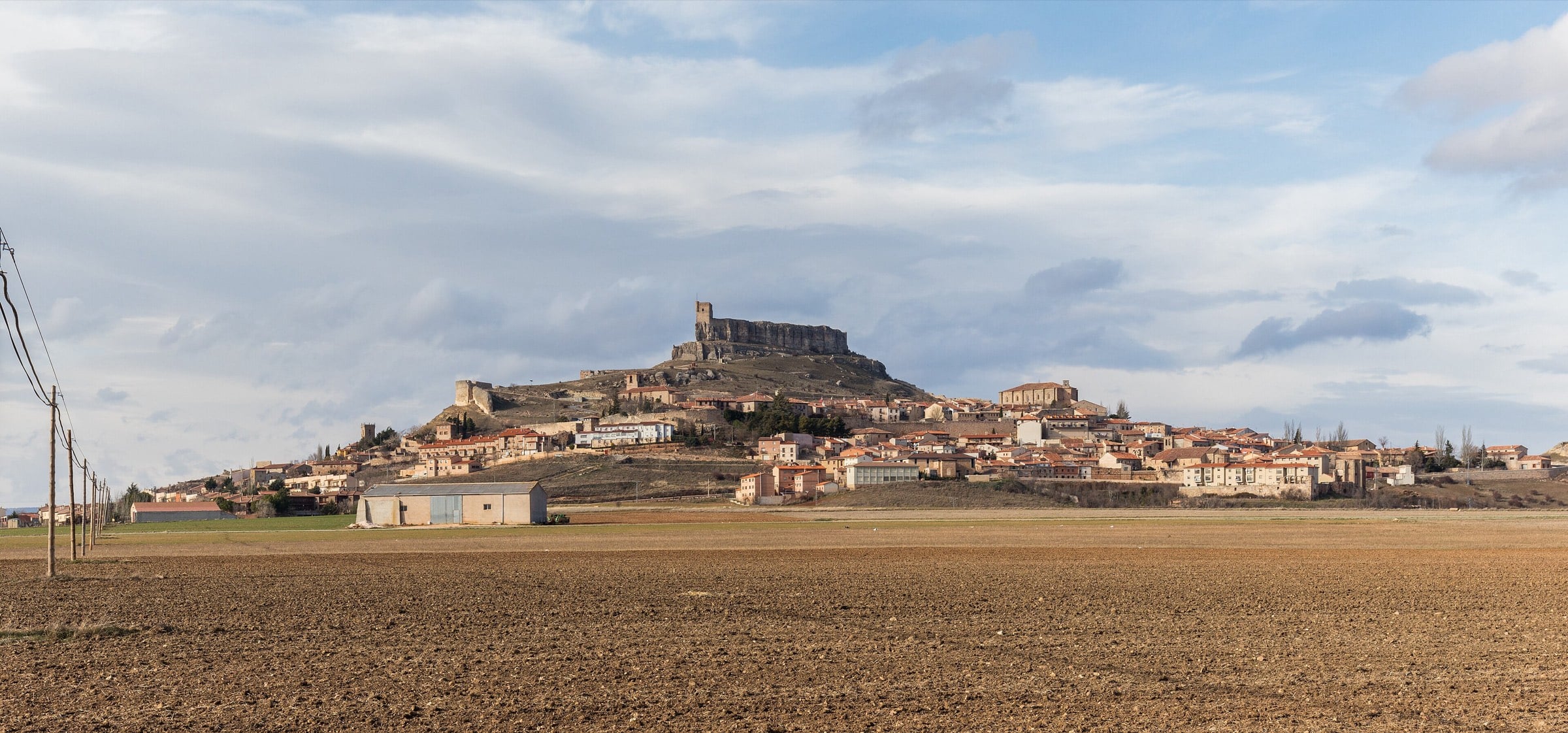
- Fortress on a gneiss crag. Free 24/7 access.
- Catalina de LancasterQueen consort
- Queen consort of Castile (1390-1406).
- Cernina (Sábado de la)Brotherhood date
- Saturday after Trinity. One of the Brotherhood's annual dates.
- Cid (El)Historical figure
- Rodrigo Díaz de Vivar. Atienza is a key milestone on the Way of El Cid.
- Cochino de San AntónFestival
- Festival on 17 January, San Antón Abad, protector of animals.
- Cofradía de la Santísima TrinidadBrotherhood
- Brotherhood organising La Caballada. Preserves books since 1679.
- Conjunto Histórico-ArtísticoProtection figure
- Atienza was declared a Historic-Artistic Site on 31 August 1961.
- Cordero asadoTraditional dish
- Star dish of mountain cuisine: whole milk-fed lamb roasted in a wood-fired oven.
E
- Empecinado (Juan Martín)Guerrilla leader
- Guerrilla leader of the War of Independence who operated near Atienza.
- ErmitasReligious heritage
- Four hermitages: the Estrella, the Humilladero, the Val and Santa Lucía.
- Estrella (ermita de la)Hermitage
- 3 km from the village. Heart of La Caballada every Pentecost Sunday.
F
- Feria MedievalFestival
- Medieval market filling the village on the Saturday nearest to 12 October.
- Fuero de 1149Historical document
- Charter granted by Alfonso VII to favour repopulation after the Reconquista.
G
- Gallina en pepitoriaTraditional dish
- Castilian stew with almonds, saffron, hard-boiled egg and white wine.
- GneisRock · geology
- Metamorphic rock of the crag on which the Atienza castle stands.
- Guadalajara (Diputación de)Institution
- Provincial council. Promotes cultural tourism of the province.
H
- HitaNearby village
- Village 1 h southwest. Birthplace of the Archpriest of Hita.
- Humilladero (ermita del)Hermitage
- Also called Hermitage of El Santo. At the entrance of Atienza.
I
- IglesiasReligious heritage
- Atienza preserves seven churches.
J
- Juan (iglesia de San)Church
- 16th-century Renaissance parish church on the Plaza del Trigo. 17th-century organ.
L
- Lancaster (Catalina de)Queen
- Queen of Castile whose seigniory included Atienza.
- Leche fritaTraditional dessert
- Set milk cream, fried and dusted with sugar and cinnamon.
M
- MadrigalNearby village
- 10 min north. The road to the Estrella hermitage runs through it.
- Migas del pastorShepherd's dish
- Stale bread fried with garlic, paprika and pancetta. Served with grapes or melon.
- Mio Cid (Cantar de)Literary work
- Mentions Atienza twice as a «mighty crag».
- MurallasMilitary monument
- Double wall: urban precinct (12th c.) and castle precinct.
P
- Padrastro (cerro)Viewpoint
- Hill south of the village. Best panoramic of the castle and the village together.
- Paisaje Dulce y SaladoUNESCO candidacy
- Joint Sigüenza-Atienza UNESCO World Heritage candidacy.
- PalazuelosNearby village
- 35 min south. 15th-century walled ensemble declared Bien de Interés Cultural.
- ParameraLandscape
- High and arid plain characteristic of the Atienza area.
- Peña muy fuerteLiterary expression
- Quote from the Song of the Cid defining the Atienza fortified crag.
- Plaza de EspañaSquare
- Square with the Town Hall and the Fountain of El Santo.
- Plaza del TrigoSquare · medieval heart
- Also Plaza del Mercado. Stone-pillar porches, exposed beams and whitewashed houses.
- Pollo en pepitoriaTraditional dish
- Quick pepitoria with chicken instead of stewing hen.
- Posada del CordónBuilding · museum
- 15th-century inn. Home of the Tourism Office and Traditional Culture Centre.
- PriosteBrotherhood role
- Brother who keeps the Brotherhood's banner in his house throughout the year.
- Pueblos Negros (ruta de los)Tourist route
- Black Architecture route of the Ocejón. Connects with Atienza by the north.
Q
- Quesada atencinaTraditional dessert
- Castilian dessert with fresh cheese, eggs and honey.
R
- Reyes (Cabalgata de)Festival
- 5 January. Three Kings Parade and Living Nativity.
- Riofrío del LlanoNearby village
- 15 min south.
- Románico atencinoArtistic school
- Rural school of Castilian Romanesque between the 12th and 13th centuries.
- Rosquillas de la abuelaTraditional sweet
- Made with oil and anise.
- Ruta de la LanaPilgrimage route
- Variant of the Way of St. James. Atienza is the end of stage 20 and start of stage 21.
S
- SabinaTree · flora
- Tree typical of the area.
- Salado (río)River · geography
- River that names the «Salt Landscape» of the UNESCO candidacy.
- Salvador CarmonaSculptor
- 18th-century sculptor. Author of the Christ of Forgiveness.
- SalvoconductoWay document
- Official Camino del Cid booklet.
- San Bartolomé (iglesia-museo)Church · museum
- Romanesque church with palaeontology museum (3,500 fossils).
- San Francisco (convento de)Monument
- Former convent of which a Gothic apse survives.
- San Gil (museo)Museum
- Former church. Today museum of sacred art and archaeology.
- San IsidroBrotherhood date
- 15 May. One of the Brotherhood's annual dates.
- San Juan (iglesia de)Church
- Renaissance, 16th c. On the Plaza del Trigo.
- San Salvador (iglesia de)Church
- Church in the Puerta Caballos suburb.
- Santa Lucía (ermita de)Hermitage
- 3 km along the CM-1001. Built in the 16th c.
- Santa María del ReyChurch · Romanesque
- Romanesque church at the foot of the castle.
- Santas EspinasReligious festival
- Celebration on the first Sunday of May.
- Santísima Trinidad (museo de la)Church · museum
- Home of the La Caballada museum. Contains the Christ of Forgiveness by Salvador Carmona.
- SeisesBrotherhood role
- The six brothers who accompany the Prioste during La Caballada, dressed in traditional black jackets and hats. The name comes from «seis» (six), their founding number.
- Semana SantaReligious festival
- Good Friday Procession of Silence, linked to the Humilladero.
- Sierra de PelaGeography
- Mountain massif north of the village.
- SigüenzaNeighbouring city
- 30 min south. UNESCO candidacy partner.
- Sopa de ajoTraditional dish
- Castilian soup of stale bread, garlic, paprika and poached egg.
T
- Tarta de panDessert · zero-waste
- Castilian dessert made with stale bread, milk, eggs and sugar.
- TitrhyaPre-Roman toponym
- Pre-Roman name of the Celtiberian hillfort on the Atienza crag.
- TorrijasDessert · Easter
- Stale bread soaked in milk with cinnamon and lemon.
V
- Val (ermita del)Hermitage · Romanesque
- 500 m from the old town. Romanesque portal from 1138 with a ten-figure archivolt.
Á
- Álvaro de LunaHistorical figure
- Constable of Castile. In 1446 his troops took Atienza.